Symptoms / Skin & coat
Skin & coat · 5 min read
Pet Yeast Infections: 3 Common Myths and What's Actually Causing That Musty Smell
Itchy paws, gunky ears and a "corn chip" smell? Why yeast keeps coming back, and what is happening beneath the surface.
If your dog won't stop gnawing on their paws, or your cat has a greasy, brownish gunk building up in their ears accompanied by that distinct "corn chip" or musty smell, you are likely dealing with a yeast infection.
For most pet owners, the immediate reaction is to reach for medicated wipes, antifungal sprays, or specialty shampoos. But if the infection keeps coming back the moment you stop treatment, you might be fighting the wrong battle.
To clear up chronic yeast issues for good, we need to separate common pet care myths from what is actually happening beneath the surface, incorporating a mix of modern symptoms and the holistic lens of Traditional Chinese Medicine (TCM).
Three common myths about yeast infections
Know the truth beneath the surface.
Myth 1: "It's just a surface skin issue"
The misconception: many pet owners believe that yeast infections are purely external problems caused by the environment, damp grass, or dirty paws, and that they can be cured entirely with topical washes.
What's actually happening: yeast (Malassezia) naturally lives on a healthy pet's skin and paws. It only overgrows when the body's internal environment changes. In TCM, chronic yeast is a manifestation of Internal Dampness and Heat. When the body's digestion (governed by the Spleen) gets sluggish from improper diets or poor fluid processing, internal "dampness" accumulates. Combined with internal inflammation (Heat), it creates a humid breeding ground that forces yeast to erupt outward through the skin, paws, and ears.
TCM insight: Internal Dampness + Internal Heat = Yeast Overgrowth (erupts outward). Key takeaway: topical care brings relief; internal balance brings the cure.
Myth 2: "Medicated shampoos are a permanent solution"
The misconception: if you scrub hard enough and use strong enough antifungal shampoos, the yeast will stay away permanently.
What's actually happening: topical treatments offer essential temporary relief by clearing surface-level fungus and soothing raw skin. However, they only treat the symptom, not the source. If your pet's internal ecosystem remains a "Damp-Heat zone," the yeast will simply return within weeks. To achieve long-term relief, you have to starve the yeast from the inside out by reducing high-starch kibbles, simple carbohydrates, and sugars that feed fungal growth.
Myth 3: "Only dirty or out-of-shape pets get yeast overgrowth"
The misconception: yeast infections are a sign of poor grooming, bad hygiene, or lack of care.
What's actually happening: yeast overgrowth has very little to do with how often you bathe your pet. Even meticulously groomed dogs and cats can suffer from chronic yeast if their internal gut microbiome or metabolic energy is imbalanced. Factors like food sensitivities, weakened digestive systems (weak Spleen Qi), or a compromised immune response are the true catalysts behind why certain pets struggle with yeast while others remain completely clear.
Root causes:
- Food sensitivity
- Weak digestion (Spleen Qi)
- Imbalanced gut microbiome
- Compromised immunity
How to break the cycle: your action plan
- Upgrade the bowl: transition away from ultra-processed, high-carbohydrate kibbles. Introduce fresh, low-glycemic foods or high-protein, meat-rich options that don't fuel fungal growth.
- Support gut flora: introduce pet-safe probiotics or fermented elements to strengthen their digestive tract and help their body process fluids efficiently.
- Keep crevices dry: while addressing the internal root cause, maintain external hygiene by thoroughly drying paws after walks and cleaning ear folds to prevent moisture from trapping heat.
Our recommendations
Products to support your pet from the outside in.
1. External antifungal and disinfecting relief
For soothing raw skin, wiping yeasty paws, and controlling surface fungal overgrowth.
Douxo S3 PYO Shampoo or Mousse
Formulated with 3% Chlorhexidine and Ophytrium, a veterinary-grade antiseptic line clinically proven to reduce yeast and bacterial overgrowth without drying out the skin barrier.
Where to find Pet Lovers Centre, Perromart, or local vet clinics.
For Furry Friends P.A.W.S (Pet's Activated Water Sanitizer) Spray & Wipes
A Singapore-formulated sanitizing solution using electrolyzed water technology. Non-toxic, chemical-free, and ideal for wiping down gunky ears, skin folds, and yeasty paws after walks.
Where to find Direct from For Furry Friends SG, Kohepets, or Good Dog People.
2. Internal gut microbiome and anti-yeast supplements
To restore digestive health, support "Spleen Qi," and rebalance the gut flora from the inside.
FurryWell Gut Restore (Pre & Probiotics)
Formulated in Singapore for pets struggling with yeast and leaky gut. Combines six targeted probiotic strains with digestive enzymes and goat milk powder.
Where to find Direct via FurryWell SG.
Zesty Paws Pre, Post & Probiotic Chews
A tri-biotic blend (Inulin prebiotic, Bacillus subtilis probiotic, and EpiCor postbiotic) to promote beneficial gut bacteria and reduce internal inflammation.
Where to find Zesty Paws SG online store, Shopee/Lazada SG, or Good Dog People.
3. Low-carb fresh diets (to starve yeast)
Replacing high-starch, heavily processed kibbles with low-glycemic, highly digestible protein.
PetCubes (Gently Cooked or Raw)
Made locally in Singapore, these fresh meals eliminate the heavy grains, potatoes, and fillers found in kibble that feed internal "Dampness" and yeast.
Where to find PetCubes SG, Kohepets, or major local pet stores.
The Grateful Pet (Frozen Raw or Gently Cooked)
Single-protein, low-carb fresh food formulations cooked locally using human-grade meats (e.g., Duck, Beef, Kangaroo).
Where to find Good Dog People, Kohepets, or direct from The Grateful Pet.
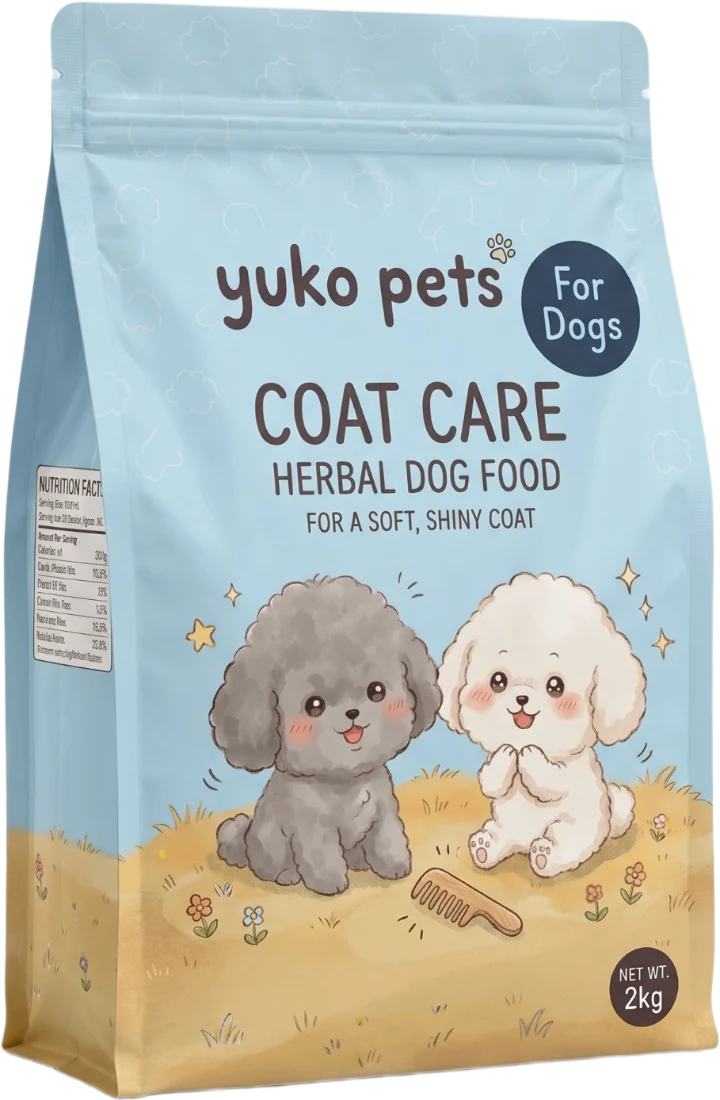 Related formulaHERBAL Coat CareYucca, white peony root and licorice nourish skin and coat from within, with two live probiotics in every bowl.See the formula