Symptoms / Digestion & weight
Digestion & weight · 3 min read
Beyond Calories: The TCVM Approach to Pet Obesity
Feeding less does not always work. How TCVM reads weight gain as Dampness, the three patterns behind it, and gentler ways to a healthy weight.
When a dog starts gaining weight, conventional advice is straightforward: feed them less and move them more. But as many pet parents discover, strict calorie restriction doesn't always yield lasting results, and often leaves a dog feeling perpetually hungry, low-energy, and irritable.
In Traditional Chinese Veterinary Medicine (TCVM), weight gain isn't viewed merely as a mathematical equation of calories in versus calories out. Instead, excess fat accumulation is seen as the physical manifestation of Phlegm and Dampness: unusable metabolic fluid trapped in the body because the internal digestive engine isn't functioning properly.
Understanding your pet's internal TCVM pattern can help you reach sustainable weight management while restoring their natural energy and vitality.
The root cause: Spleen Qi weakness and Dampness
In TCVM, the Spleen is the primary engine of digestion. It is responsible for transforming food into vital energy (Qi) and transporting fluids smoothly throughout the body.
When the Spleen becomes weak, due to highly processed diets, cold foods, overfeeding, or lack of movement, it loses its ability to process nutrients efficiently. Unprocessed fluids pool together, turning into Dampness. Over time, stagnant Dampness condenses into Phlegm, which physically settles under the skin and around internal organs as fat.
3 common TCVM patterns behind canine obesity
TCVM recognizes that dogs hold onto weight for different underlying reasons. Identifying your dog's pattern is the first step toward effective weight loss.
1. Spleen Qi Deficiency with Damp-Phlegm (the sluggish, heavy dog)
This is the most common pattern seen in companion pets.
What it looks like: soft, squishy fat deposits around the chest and waist, chronic lethargy, soft or variable stools, gassiness, and a tendency to tire quickly on walks.
The root cause: a weakened digestive fire that cannot clear moisture, resulting in fluid retention and fat buildup.
2. Liver Qi Stagnation (the frustrated, emotional eater)
Stress and lack of stimulation directly impact a pet's metabolism.
What it looks like: constant begging or hyper-fixation on food, rapid eating, irritability, and weight gain that coincides with life changes (such as moving, a new baby, or long hours spent home alone).
The root cause: blocked energy (Qi) in the Liver leads to internal frustration and digestive stagnation, causing the dog to seek food for emotional comfort.
3. Spleen and Kidney Yang Deficiency (the cold, senior metabolism)
Often seen in older pets or dogs with long-term metabolic slowdown.
What it looks like: weight gain accompanied by severe intolerance to cold, seeking out warm sun spots or blankets, stiff back legs, and sluggish morning movement.
The root cause: a decline in internal warming energy (Yang), causing the body's baseline metabolism to drop significantly.
How to support a healthy weight holistically
Rather than simply starving a dog on low-calorie filler kibble, TCVM focuses on reviving the digestive fire so the body can naturally clear Phlegm and Dampness.
1. Feed gently cooked, Spleen-warming foods
Cold or raw food requires immense energy for a weak Spleen to break down.
- Opt for warm and digestible: serve food at room temperature or slightly warm. Incorporate lightly cooked, lean proteins like turkey or white fish paired with Spleen-strengthening veggies like steamed pumpkin, carrots, or butternut squash.
- Add draining ingredients: small amounts of cooked Chinese pearl barley (Coix seed) or steamed celery help naturally drain excess Dampness through urination.
2. Ditch high-carb, heavy treats
Commercial biscuits and dairy-based treats add heavy Dampness to the system.
- Swap for clean snacks: replace processed biscuits with single-ingredient dehydrated meats (like chicken breast) or low-calorie, crisp vegetables like cucumber slices and steamed green beans.
3. Move stagnant energy daily
Exercise does more than burn calories; it physically circulates Qi and clears Dampness.
- Consistent, moderate movement: daily brisk walks are better for clearing Dampness than sporadic, weekend-only bursts of high-intensity play.
- Mental enrichment: for Liver-stagnant dogs, sniffing walks ("sniffaris") and puzzle feeders release trapped mental energy and reduce food fixation.
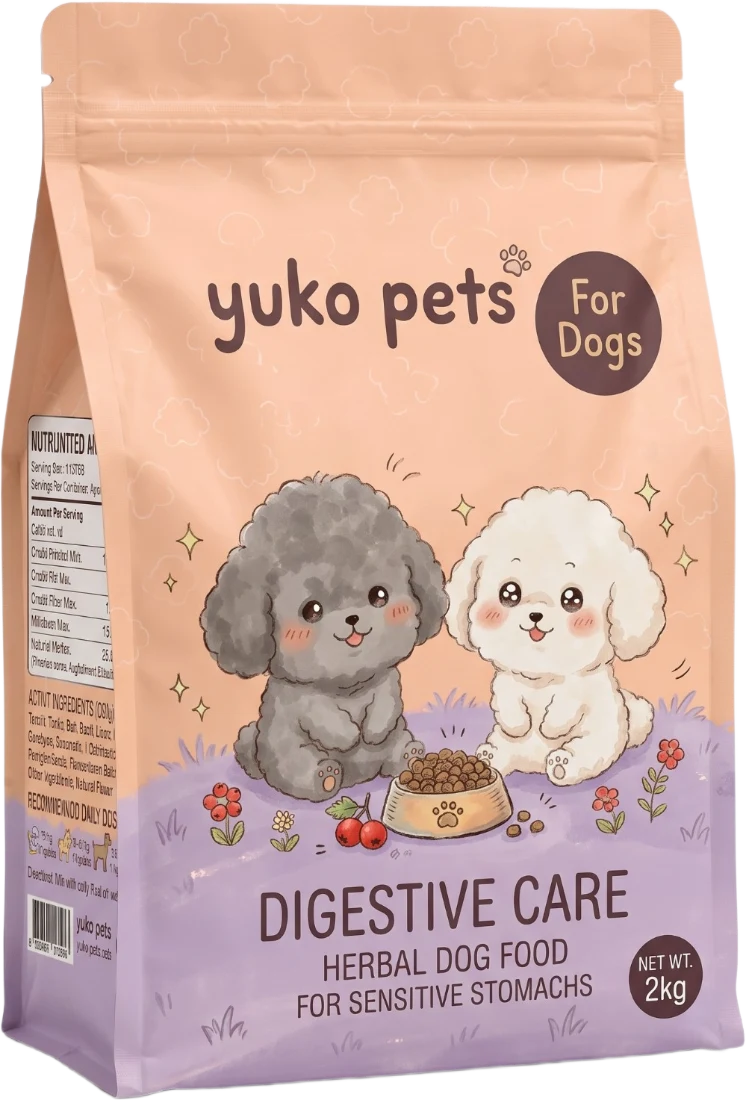 Related formulaHERBAL Digestive CareHawthorn, poria and monk fruit support smooth digestion, with two live probiotics in every bowl.See the formula